
Explore this service in pictures
Technical specifications
| Materials | MDF, MDFlam, Sunta, Suntalam, Kontrplak, Masif ağaç, Masifpan |
|---|---|
| Working area | Routers: 200 × 400 cm and 210 × 280 cm. The method and workholding are assessed for each job. |
| Thickness | Confirmed according to part thickness, carving depth and rear-face requirements. |
| Tolerance | Critical dimensions and acceptance criteria are confirmed for each job before production. |
Specify the pattern and machining depth for the wood surface
Wood carving and engraving can be used to add text, decoration, grooves or relief designs to a surface. Furniture parts, decorative panels, presentation pieces and personalised projects may each need different operations. At Modoko CNC Kesim Cutting Centre, we review your design together with the material, actual dimensions and desired surface effect. When sending a drawing to our workshop in Istanbul Dudullu, explain how the part will be used and which faces will remain visible, as well as how it should look.
Carving depth is an important part of the design. Lightly engraving text, routing a groove to a specified depth and creating a three-dimensional relief are different operations. Mark the details you like in your reference photograph. Lighting and paint affect appearance, so do not leave depth to be inferred from shadows alone. Provide the target width, length, overall thickness and dimensions of the area to be machined. The scope of model preparation is discussed separately according to the current state of the production file.
Wood species and visible face
Requests involving solid wood, edge-glued panels, plywood or wood-based sheets require an exact material description. Specify the product type, thickness, actual dimensions and any previous processing. Tell us about paint, varnish, facing or bonded sections on the surface. If supplying your own material, product photographs and supplier details help with assessment. If the visible face matters, clearly mark which side is to be machined. It should be clear which material face corresponds to the front view in the file.
For a natural wood appearance, grain direction and the relationship between parts are design choices. If panels in a set should have matching orientations, show this on the layout. Rotating a sheet to fit more parts may not give the appearance you want. Mark knots, colour variations or areas you do not want used on a photograph. Usable material area is assessed alongside these details. Our edge-glued solid wood panel cutting service provides guidance on sheet orientation and preparing a parts list.
Text, line and relief applications
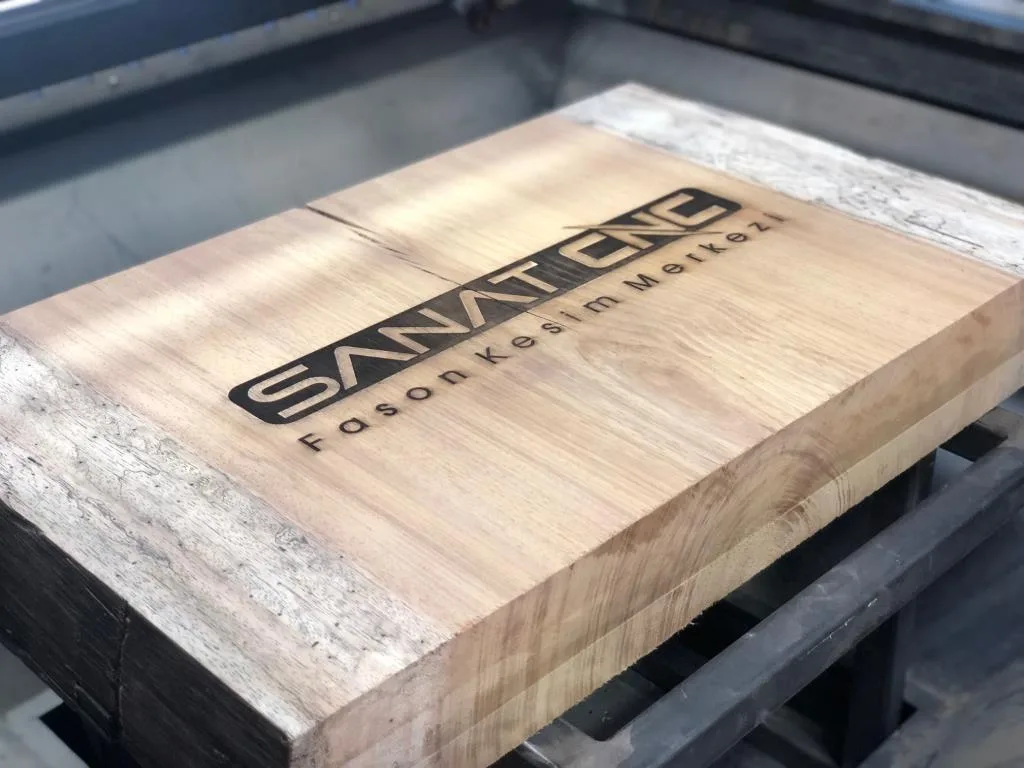
For text engraving, specify the final wording, actual size and position. Thin characters and small gaps are assessed at production size. If font shapes or logo proportions must be preserved, send a vector file together with a visual preview. Check spelling and Turkish characters before submitting the text for production. If the order contains different names or numbers, match the text list to part codes so that the content for each part can be tracked clearly.
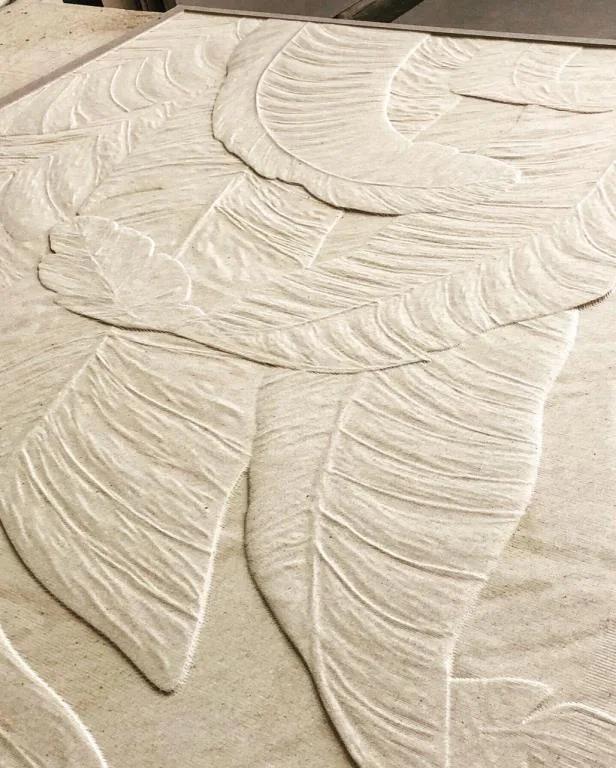
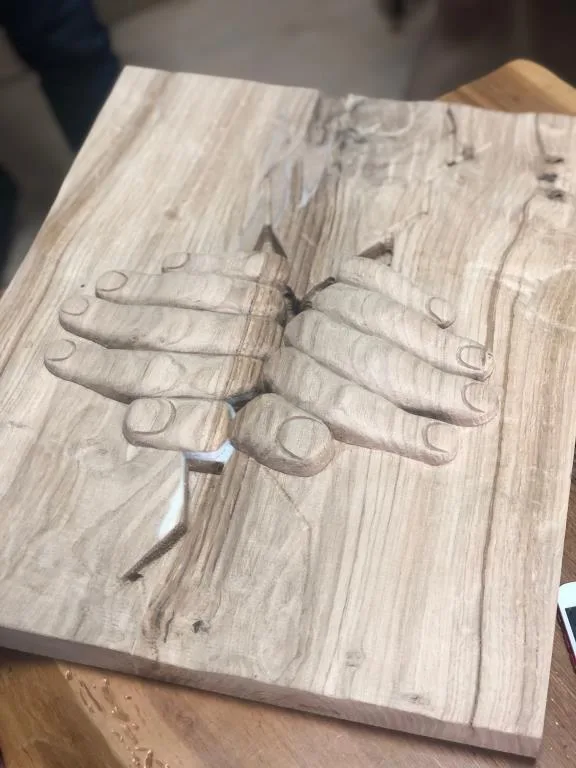
A pattern intended to form a three-dimensional surface requires a model containing height information. The deepest and highest points are assessed alongside the material remaining at the rear. Figurative panels may have thin projections or very small details; mark those that matter to you. Our 3D cabinet door and relief machining service explains how to prepare these requests. Our relief file preparation guide explores the relationship between a model file and a visual reference in more detail.
Assessing mechanical machining and laser processing
Modoko CNC Kesim has three-axis CNC routers with working areas of 200 × 400 cm (Exitech) and 210 × 280 cm (Mutlucam). Carving, grooving and surface machining requests are assessed according to the method required by the drawing. Table dimensions do not mean that the entire area can be used in the same way for every part. Workholding and access to the machining area are also included in planning. If you want an existing wooden item machined, show the shape of the entire item as well as its top surface.
For a different surface appearance on suitable materials, CO2 laser engraving can also be discussed. Our workshop's Xenon laser has a 140 × 100 cm working area and 200 W power. These specifications do not mean that every wood or finish can be processed with the same result. Our laser engraving and marking page explains how surfaces, materials and layouts are assessed. Selecting the method together according to the design's actual needs makes delivery expectations clear.
Workholding and areas to be machined
Producing a new part from a sheet and carving an existing product may require different preparation. An existing part can have protrusions, sloped faces, connections or delicate areas. Describe its dimensions and the areas that must not be machined. Discuss feasibility before sending valuable or irreplaceable material. If several parts look identical, check that their dimensions actually match. Agreed reference points make positioning easier to track in a production run.
Critical dimensions and acceptance criteria are confirmed for each job before production.
File preparation and version tracking
In two-dimensional drawings, define outer boundaries, carving areas and different depths separately. State the units and actual outer dimensions of DXF or DWG files. CDR, AI, EPS and PDF files can also be submitted for assessment; their drawing content is checked for production suitability. Saving a photograph in another format does not automatically turn it into a dimensioned drawing. Describe design editing or remodelling requirements separately from the production request. A file preview helps compare the design with the intended appearance.
Assign a code to each distinct product when preparing the quantity list. Use separate rows for parts with different face orientations, materials or dimensions. Keep only the current version in the file; clearly label any older drawings supplied for comparison. Report changes after production approval together with the affected parts. Our CNC router cutting service explains the general workflow from file to part. An organised file package helps match each design to the correct material and quantity.
Price, finish and delivery
Wood carving prices depend on material, machining area, depth, detail, number of different designs and quantity together. Two panels with identical outer dimensions may require different work if their surface patterns differ. State any design preparation, sample or special packaging requirements. Our pricing page helps you compare which operations a quotation includes. List painting, varnishing, sanding and installation requirements separately from cutting. Delivery conditions for raw machined parts and fully finished products should be discussed separately.
For jobs requiring a sample, agree in advance which dimensions and appearance features will be approved. Include protection of delicate relief details in the packaging requirements. If the parts form a composition, retain their assembly order and identification codes. in our wood machining gallery and in our relief galleryDelivery and dispatch terms are confirmed for each job.Using the quotation form to share your design so we can define the production and delivery scope together.
During drawing review, part orientation, tool access, workholding clearances, visible faces and subsequent production steps are considered together. This lets the operator references and the customer’s finished-part definition be checked clearly in the same file before production begins.
Frequently asked questions
Can I order carving from a photograph?
A photo provides a reference. Actual dimensions, depth and a suitable production file must be confirmed separately.
Can I bring an existing wooden part?
Provide all part dimensions, surface condition and the area to be machined in advance so we can discuss feasibility.
Can I specify the wood grain direction?
Yes. Mark the visible face and grain direction on the drawing or parts list.