
Explore this service in pictures
Technical specifications
| Materials | MDF, MDFlam, Sunta, Suntalam, Kontrplak, Masif ağaç, Masifpan |
|---|---|
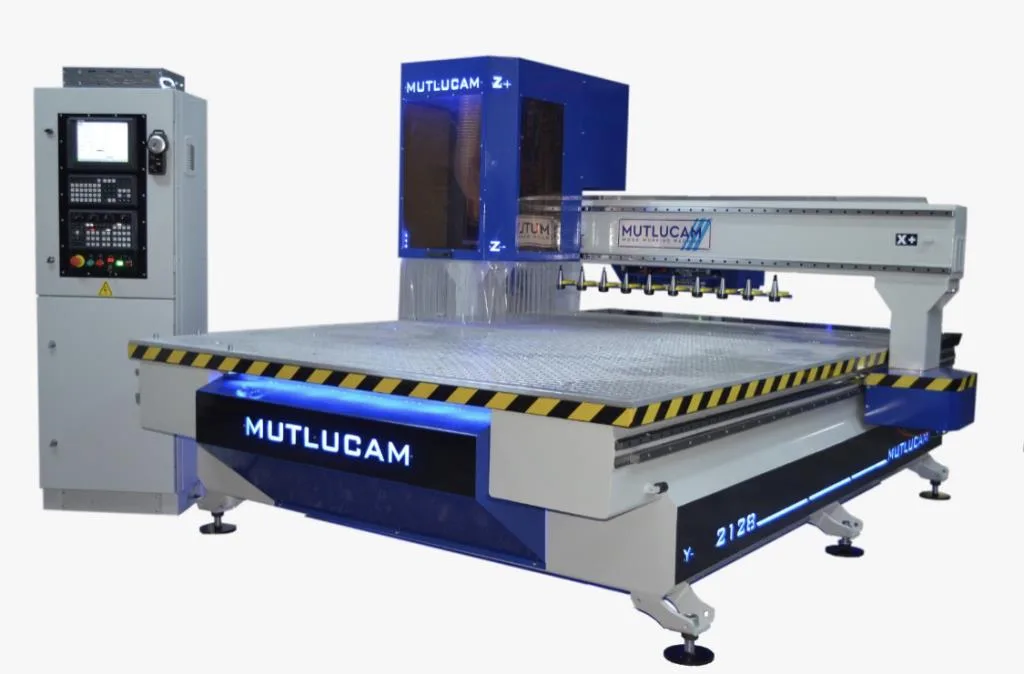
| Working area | Exitech: 200 × 400 cm; Mutlucam: 210 × 280 cm. Material layout is assessed for each job. |
| Thickness | Confirmed according to sheet type, actual thickness and the required operation. |
| Tolerance | Critical dimensions and acceptance criteria are confirmed for each job before production. |
Parts cut to size from edge-glued solid wood panels
Cutting edge-glued solid wood panels turns timber panels into parts for furniture or custom applications according to a drawing. Table and coffee table components, shelves, decorative surfaces and specially shaped parts can have different dimensional and appearance requirements. At Modoko CNC Kesim, we assess these requests alongside the panel specification, actual dimensions and intended use. When sending your file to our Dudullu workshop in Istanbul, include joint details and preferred visible faces as well as the outer shape so that we can prepare correctly.
For an edge-glued solid wood panel enquiry, specify the wood species, panel thickness and supplier details rather than just the material name. Do not assume that similar-looking panels are the same product. Describe which face will be used, any previous processing and damaged areas. The number of parts and the panel's actual usable area are assessed together. If supplying your own material, you can share the drawing and discuss the scope before purchasing or shipping it. This establishes preparation requirements from the outset.
Grain direction and matching parts
If the appearance of the wood matters, show the grain direction in the parts list. Use the overall layout drawing to explain how the grain should relate between adjacent furniture components. Rotating a part to fit more pieces on a sheet can change the intended appearance, so orientation must be specified in the production file. Mark any knots or colour variations that should be kept out of visible areas on a photo of the sheet. The production plan is assessed against the usable areas of the material.
Use part codes to define the assembly order of a set. For example, two panels with the same outline may be installed with different faces outward. Right- and left-hand parts may also have different connection positions. Include part codes in both the drawing and quantity list. Number individual sheets if particular parts must be cut from specific sheets. Explain these preferences when requesting a quote, as they can affect the material layout.
Outer shape and edge details
Dimension the outer contour, rounded corners and any internal openings in your cutting request. If an edge shape or profile is required, include the relevant cross-section. An edge detail in a photograph does not provide all the measurements; specify its width, depth and the edges to which it applies. Explain which face the edge meets and how the part will be used. Straight cutting, edge profiling and surface carving are assessed as separate operations. The quotation should clearly identify which are included in the order.
Show any surface text, grooves or decorative patterns separately in the drawing. Add written dimensions for different depths rather than indicating them only by colour. Our wood carving and engraving service explains how to prepare surface processing requests, while our 3D cabinet door and relief machining page covers assessment of relief designs. If you need these operations alongside outer cutting, include them in the same request. The surface preparation stage at delivery is discussed separately.
Machine working area and workholding
Our workshop has Exitech 200 × 400 cm and Mutlucam 210 × 280 cm 3-axis CNC routers. Solid wood panel projects are assessed from their drawings and materials against these machines’ capabilities. The usable area depends on part shape and workholding, rather than table dimensions alone. Very narrow extensions or designs that remove most of a sheet may need special assessment. Sending the complete part geometry helps identify the areas available for holding it during machining.
Critical dimensions and acceptance criteria are confirmed for each job before production.in our CNC router cutting service explains the general machining approach.
Holes, joints and assembly connections
Show connection-hole diameters, centre positions and reference edges on the drawing. Technical dimensions for screws, pins or other hardware are helpful. Specify which face the holes should be drilled from. When the front and back look similar, orientation should not be guessed from a photo alone. If another component fits inside the part, include its dimensions too. Required assembly clearances or fits may not be apparent from an overall dimensions list.
Establish sample requirements in advance for parts that work together as a set. Assessing a joint may also require the mating part. Report any changes to sheet thickness or joint details after sample approval. Record which file version the approved sample represents. Update the parts list for batch production even if only the quantity changes. Using the same dimensions and codes as your installation team helps ensure that delivered components are fitted in the correct locations.
File and material list
Prepare DXF or DWG drawings at actual size and state the units separately. Distinguish outer contours, internal openings, surface operations and construction dimensions. Check duplicate lines, open boundaries and obsolete design alternatives. A key dimension in your message helps verify scale. Our DXF file preparation guide lists checks to carry out before sending the file. The model and height information needed for three-dimensional work are assessed separately.
Keep each part’s code, width, length, thickness, quantity and grain direction in one list. Separate parts to be cut from different sheets. Identify the visible face and surface finishing requirements. When revising a drawing, clearly state that it replaces the previous file. Discuss separately how changes made after production starts affect the current work. Specify file preparation or modelling requests; they should not be assumed to fall within the same scope as machining an existing drawing.
Pricing and material layout
Pricing for cutting edge-glued solid wood panels considers the material, number of different geometries, edges to be machined, holes, surface details and quantity together. Repeated simple parts need different preparation from parts with individual carved designs. Grain direction and unusable sheet areas may restrict nesting. Tell us in advance if you want leftover material returned. Our pricing page explains which points to consider when comparing quotation scopes. The final assessment is based on your own drawing.
The quotation should clearly define material sourcing, cutting, additional surface treatments and packaging. List sanding, oiling, painting, varnishing or installation requirements separately. If another team handles the next process, specify the condition in which they need the parts supplied. For samples, identify which appearance features or dimensions will be approved. Plan production, transport and installation time separately. For customer-supplied material, the sheet's arrival at the workshop also affects the delivery schedule.
From reference examples to your own part
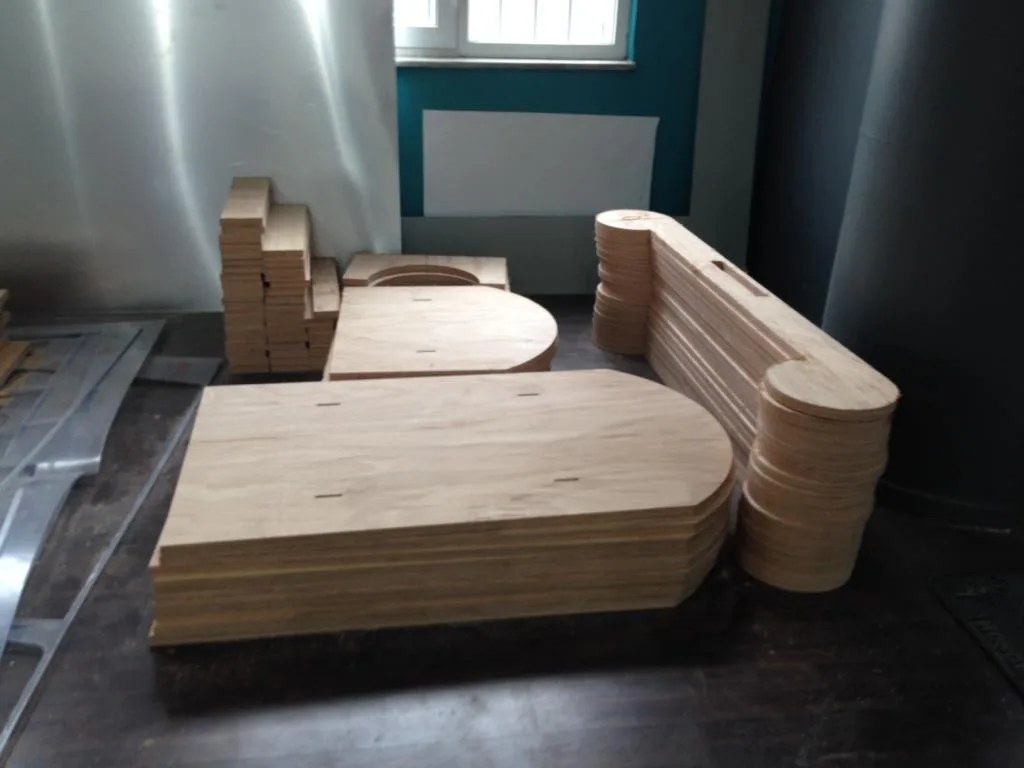
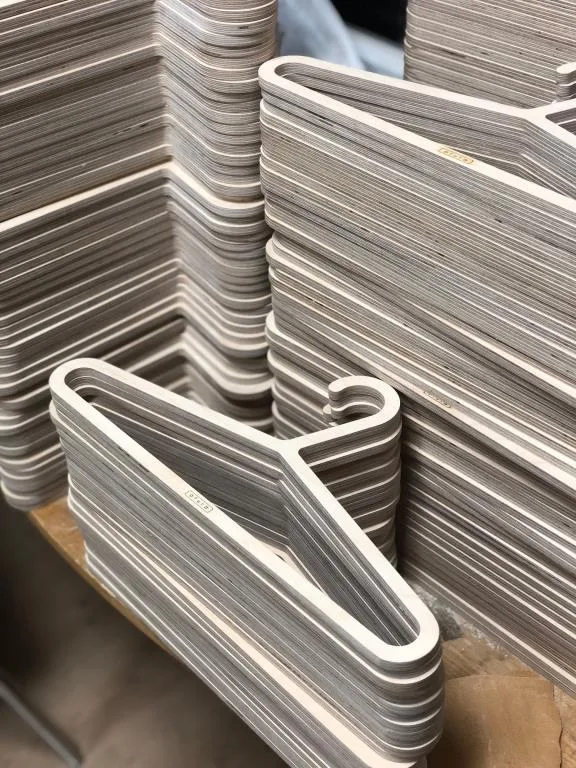
The images on this page illustrate wooden part geometries and our machinery. The type and thickness of your own edge-glued solid wood panel are verified separately when ordering. in our wood machining galleryDelivery and dispatch terms are confirmed for each job.Using the quotation form to send your drawing and parts list so we can clarify your requirements from production to delivery together.
Frequently asked questions
Can the grain direction be preserved?
Show the required grain direction for each part on the drawing. Sheet layout is assessed with this information.
Can I also request an edge profile?
Specify the required edge shape, cross-section and the edges to be treated separately. Suitability is assessed from the drawing.
Are varnishing and installation included?
Final surface treatments and installation are not automatically included in cutting; explain your delivery requirements.