
Explore this service in pictures
Technical specifications
| Materials | MDF, MDFlam, Sunta, Suntalam, Kontrplak, Masif ağaç, Masifpan |
|---|---|
| Working area | The machine and usable machining area are confirmed according to part geometry and workholding requirements. |
| Thickness | Assessed from the material and drawing. |
| Tolerance | Critical dimensions and acceptance criteria are confirmed for each job before production. |
Derinlikli kapak ve dekoratif panel yüzeyleri
Üç boyutlu modelin takım yoluna dönüştürülmesi, malzeme kalınlığı ve hedef kabartma derinliği birlikte değerlendirilir. Daha sade kanal ve form işlemleri için CNC kapak kesimi, tamamlanan yüzeyler için rölyef galerisini inceleyin.
From a flat panel to a three-dimensional surface
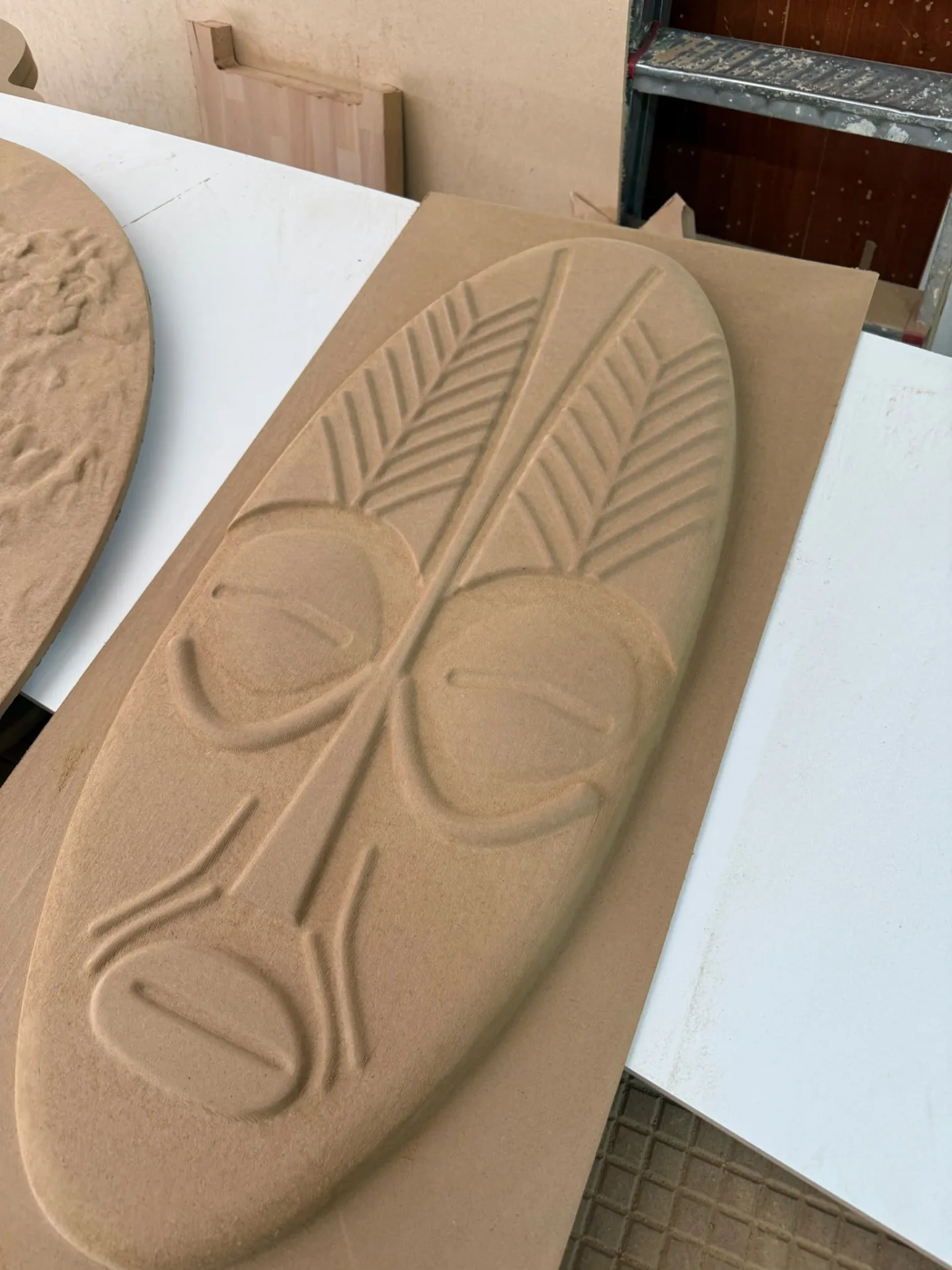
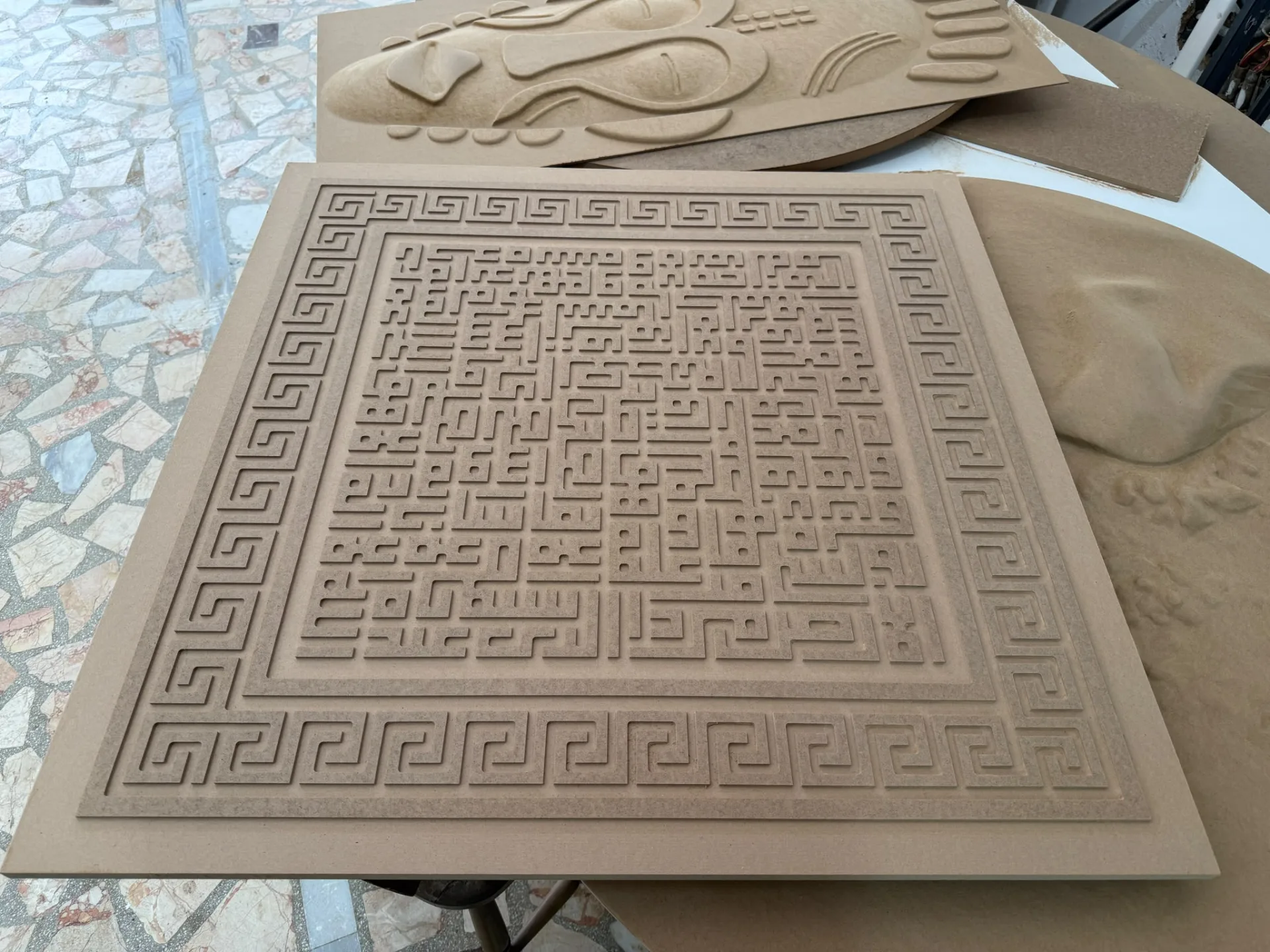
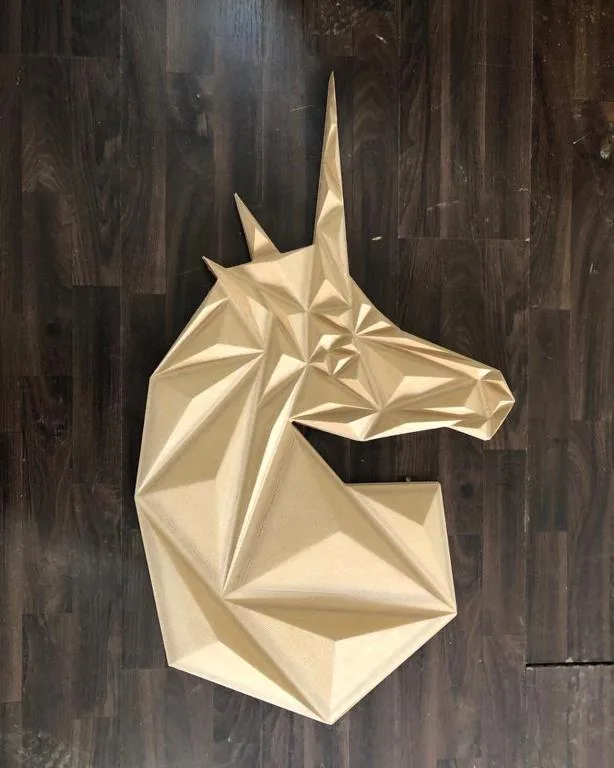
Three-dimensional CNC machining creates a raised form by removing varying amounts of material from the surface. A relief design consists of more than outer lines: heights, recesses and transitions together determine its appearance. At Modoko CNC Kesim, we assess requests for geometric panels, botanical patterns, organic surfaces and figurative reliefs using the model. A design photograph can provide an initial idea, but cannot by itself replace a production model defining the surface depths to be machined.
Explore models completed in our workshop in the relief carving gallery. Circular patterns, leaf shapes and wave surfaces illustrate different design approaches. When choosing an example, also specify the dimensions and intended use. Requesting the same appearance at a much smaller or larger size may require the details to be reassessed. Our aim is to establish from the outset how the design can be produced in the chosen material and dimensions, as well as transferring the model to the machine.
Where are relief carvings used?
Relief carving is used for decorative wall panels, furniture surfaces, custom cabinet doors, frames and display pieces. A large wall design may require several sections rather than one panel. Joint positions, pattern continuity across sections and assembly order then become important. Send an overall view with the individual part files to explain the complete design. Show each part code and the assembly sequence in the same document.
For relief carving on a moving component such as a door, assessment goes beyond the front view. Specify total thickness, rear connections, hinge areas and regions to remain unmachined. If the pattern approaches hardware or another part, agree clearances with your installation team. Painting or coating after CNC machining can also affect appearance. Record the required surface condition on delivery and who will perform subsequent operations in the quote.
Height and orientation information in the model
STL is our preferred file format for three-dimensional work. Provide the target width, length and overall height with the file. Clearly identify which face of the model should point upwards. Misinterpreting the machining direction can reverse raised and recessed areas, so include a screenshot or orientation notes. A visual reference helps verify the model. Repeating the dimensions in the quotation message is useful rather than relying only on the file name.
Consider the model's base, the material that will remain at the rear and the deepest machining point together. Mark any areas where the material becomes abruptly thinner. When resizing, explain whether all axes have been scaled by the same factor. If you want relief height to remain constant while extending a panel's length, state this separately. A pattern that looks pronounced in a photograph may have a different effect when machined more shallowly. Request a sample at the outset if needed to confirm the appearance.
Material selection and surface requirements
We assess relief carving requests for MDF and suitable wood materials alongside their intended use. Raw MDF and solid wood with visible natural grain do not produce the same appearance. Surface preparation is a priority for a panel that will be painted, while grain direction can become part of the design where the wood remains visible. Include the material type, thickness and preferred face with the file. If supplying your own material, provide its dimensions and general condition in advance; suitability is checked against the design.
Completing CNC machining of a relief does not necessarily mean supplying a finished decorative product ready to install. Further preparation and finishing are considered separately according to the required appearance. List requirements such as sanding, painting, coating, hanging hardware or installation as separate items. Lighting, colour and camera angle in a reference photograph can change how the relief appears. When describing your visual expectations for the quotation, consider whether the reference shows raw or painted material.
Machine capacity and accessible details
Suitable relief projects are planned on our Exitech 200 × 400 cm and Mutlucam 210 × 280 cm 3-axis CNC routers. Working area does not mean every model within those dimensions can be machined in one piece. Workholding, tool access and machining orientation are assessed separately. Models with undercuts or features inaccessible from one direction may require the production method to be reconsidered. Request a model review rather than assuming every surface can be machined under the same conditions.
Critical dimensions and acceptance criteria are confirmed for each job before production.
What affects machining time and price?
Relief carving cost cannot be determined from the panel's outer area alone. The density of surface details, amount of material to remove, machining depth and required finish affect processing time. Two panels of the same size may differ greatly: one may have broad, smooth transitions and the other many fine details. They require different machining plans. Any model preparation or correction is assessed separately. A firm lead time and fixed price cannot be given reliably without reviewing the file.
Provide the number of different designs as well as the quantity. Repetitions of one design and panels with different designs require different preparation. Dividing a large composition into sections may add assembly and packaging work. Include sample production, customer approval and subsequent surface treatments in the schedule. Our pricing page provides information for comparing quotation scopes, while our contract CNC cutting page explains the general workflow from file to delivery.
Workflow from sample to delivery
Clearly identify the final design version to be used for the order. Different files sent under the same name can cause dimensional confusion. Providing the revision date, part code and changed details in writing helps ensure the approved design reaches production. For multiple panels, also include a simple layout showing each panel's position.
First, we check the model, target dimensions and material details. Unclear heights or details that cannot be machined are discussed before production. Depending on the need, we can plan a sample, a small surface specimen or a first-part assessment. Clarify which features the approved sample represents: pattern appearance, surface level, material and colour are separate matters. Approval of a raw sample does not also approve paint to be applied later.
Delivery and dispatch terms are confirmed for each job.MDF CNC Cutting and Panel Machining and CNC Router Cutting to explore the relevant operations on our pages, through the quotation form to send your model and share your project details with us.
SEE THE WORK UP CLOSE
From our workshop, in motion.
Short clips of our own production and finished pieces. Select a video to watch.
Frequently asked questions
Can a relief be produced from a photo?
A photo is a reference; production needs a dimensioned three-dimensional model and depth information. Let’s discuss model preparation when quoting.
How should I choose the relief depth?
Sheet thickness, rear-face fixings and the required relief are assessed together. Specify the deepest point in the design and the remaining base thickness.
Are painting and installation included?
Specify surface treatment, painting and installation requirements separately. The delivery scope is clarified in the quotation.