
Explore this service in pictures
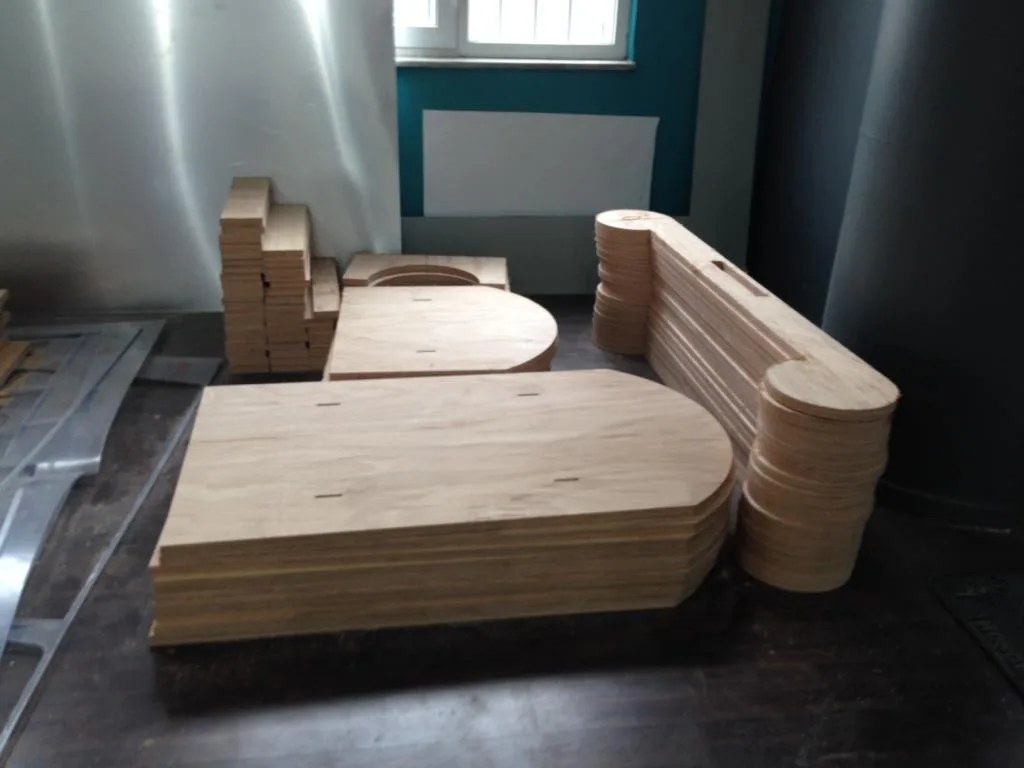
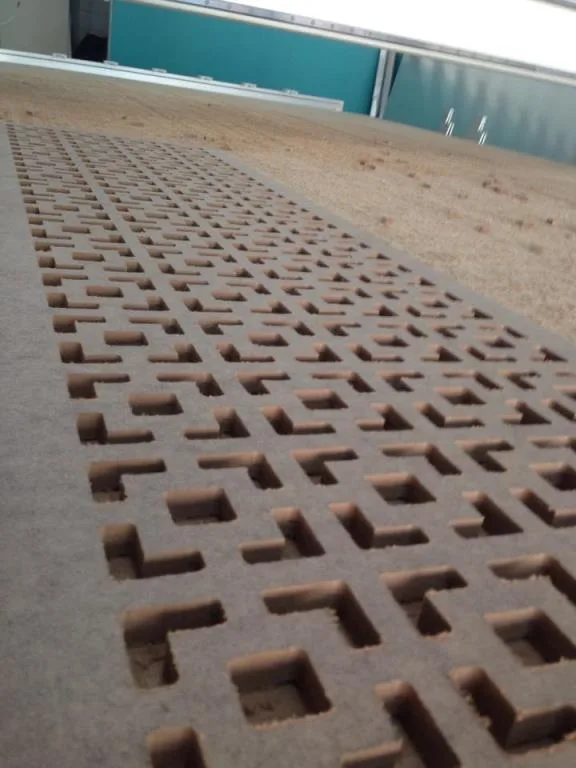
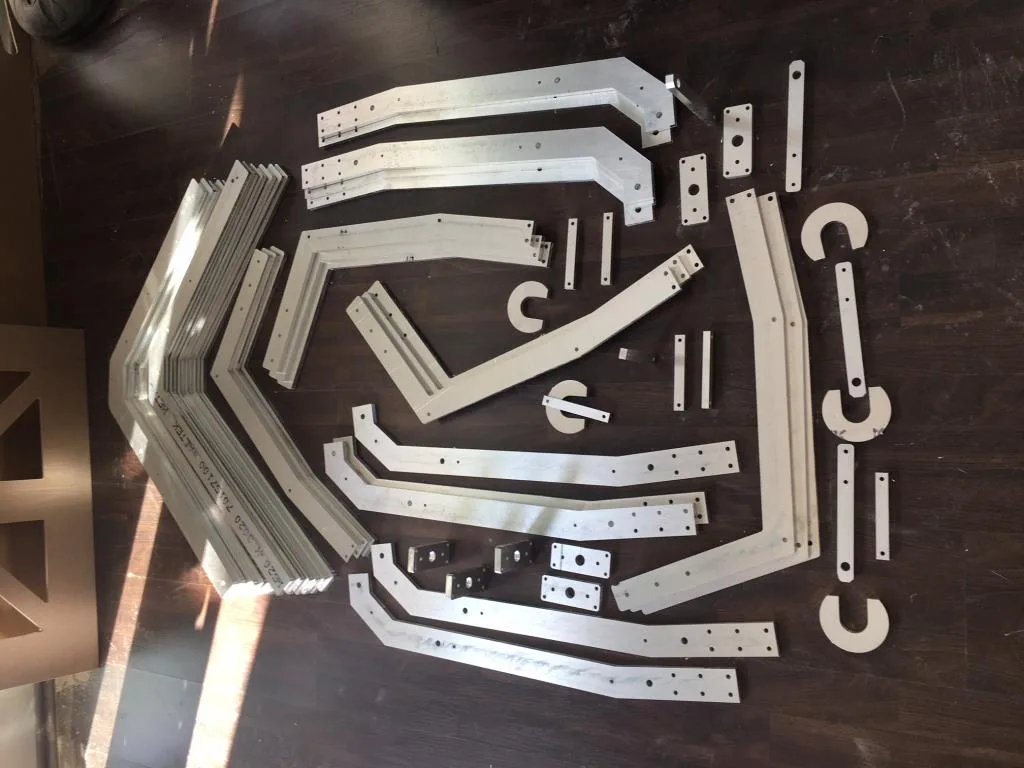
Technical specifications
| Materials | MDF, MDFlam, Sunta, Suntalam, Kontrplak, Masif ağaç, Masifpan |
|---|---|
| Working area | The machine and usable machining area are confirmed according to part geometry and workholding requirements. |
| Thickness | Assessed from the material and drawing. |
| Tolerance | Critical dimensions and acceptance criteria are confirmed for each job before production. |
CNC routing: the machining method used in production
CNC routing is the technical method used for cutting, grooves, holes, pockets and three-dimensional surfaces in furniture and panel production. For commercial planning and delivery, see contract CNC cutting; for our main panel service, see MDF CNC cutting.
What does the CNC router cutting service include?
CNC routing uses a rotating cutting tool to machine contours defined in a digital drawing. The work is not limited to cutting parts from sheets: grooves, pockets, face milling and, with suitable files, three-dimensional machining can be part of the same production plan. At Modoko CNC Kesim Cutting Centre in Ümraniye Dudullu, we assess furniture, signage, interior, scale model and mould projects from their drawings. Since material, workholding and delivery requirements differ for each job, we consider the production method alongside the file geometry.
CNC routing uses a physical cutting tool. Its diameter therefore affects internal corners; a corner drawn perfectly sharp may have a small radius when machined. Share details of interlocking parts, slots or hardware holes before requesting a quotation. This lets us assess how the part will function in assembly alongside its outer dimensions. Clearly identifying functional dimensions in the technical drawing reduces the need for later corrections.
We select the material and machining method together
Malzeme uygunluğu, gerçek ürün bilgisi ve çizim üzerinden iş bazında değerlendirilir.
On a faced panel, identifying the visible side is just as important as the drawing. The sides on which marks, holes and grooves are required are included in the production plan. Grain direction in solid wood, the layered structure of plywood and the desired edge appearance of acrylic can all affect the result. If you are supplying the material, provide the actual sheet dimensions, thickness and surface condition in advance. If the material has not yet been chosen, start by sharing the part's intended use and the appearance you want.
Applications from furniture to signage
CNC machining can produce cabinet components, door surfaces, decorative panels and joint details for furniture. Architectural decoration often involves partition panels, wall coverings and patterned surfaces. For advertising and display stands, it can produce letters, logo outlines and interlocking support components. In model and mould projects, assembly order matters alongside dimensional consistency. We assess the file according to its intended use rather than applying the same cutting programme to every job.
A one-off prototype and batch production require different preparation. For a new design, checking a sample part's dimensions and fit first may be useful. Clear part codes, quantity lists and material distinctions allow more organised nesting for batch work. We recommend including a date or revision number in the approved file name to prevent different revisions from being mixed within an order. This gives both you and our workshop a clear production reference.
Factors affecting CNC router cutting prices
Pricing is assessed from material type, thickness, total cutting length, machining depth and part quantity. Two sheet projects may look similar, yet many small contours, fine-tool details or deep pockets can alter production time. Sheet width and length alone are therefore insufficient. A ready-to-cut file and quantity list make the scope clearer.
File preparation, workholding method, tool changes and sorting after production are also considered in the quote. Supplying your own material and requesting material from the workshop may involve different scopes; state your preference in your first message. Collection or shipping requirements are confirmed separately. We prepare project-specific quotes rather than applying a fixed square-metre rate. When comparing quotes, check that they cover the same materials, cutting, additional work and delivery terms.
File preparation guide
DXF and DWG are preferred for two-dimensional contour work, and STL for three-dimensional surfaces. CDR, AI, PDF and EPS files are also accepted, but the file extension alone does not establish readiness for cutting. A photograph or scanned drawing embedded in a PDF does not replace a scaled vector contour. Drawings must be at actual size with units clearly stated. Use millimetres where possible and note a known dimension for checking.
A closed vector means that the lines around a part to be cut form a continuous boundary. Open-ended lines, overlapping contours and duplicate lines must be corrected before production. Convert text to curves so that a different font on another computer cannot change the letter shapes. Separate internal openings from the outer contour. Naming drilling, routing, engraving and through-cutting operations on separate layers reduces the risk of selecting the wrong process.
State groove and pocket depths in written notes rather than relying on colours alone. If both faces need machining, show the reference orientation and dimensions to preserve when turning the part over. For STL models, scale, surface integrity and total required depth are checked. Send material, thickness, quantity and any assembly drawing with the file. Highlight critical joint dimensions: a nominal on-screen dimension does not always provide the clearance needed for assembly.
Five steps from quotation to production
- Send a file: Share your drawing, material details, thickness and part quantities via WhatsApp or email. Include your target delivery date.
- Quote: We assess whether the file can be machined, what preparation is needed and the production scope. Unclear dimensions are resolved before production.
- Approval: The final file, quantities, material and delivery conditions are agreed. If there is a revision, the version replacing the previous file is identified.
- Production: A cutting plan is prepared from the approved drawing and machining is carried out on a suitable machine. The job's requirements determine the cutting tool and workholding method.
- Delivery / shipping:Delivery and dispatch terms are confirmed for each job.
Tolerance, material waste and delivery planning
Critical dimensions and acceptance criteria are confirmed for each job before production.
Sheet nesting requires allowances for the cutting tool, spacing between parts, sheet margins and workholding areas. The combined net area of the parts is therefore not the same as the sheet area required. Preserving pattern or grain direction can further restrict layout options. Assessing waste from the file is more reliable than estimating from total square metres alone. State any requirements for returning leftover material when placing the order.
Lead time depends on file readiness, material availability, order volume and machine scheduling. Fine relief carving may take a different amount of time from simple contour cutting. We review the scope before committing to a specific date. Customers around Dudullu, Modoko and Ümraniye can discuss workshop collection; shipping can be planned for other Istanbul districts and the rest of Türkiye. Separating production completion from transport time helps you build a more realistic project schedule.
SEE THE WORK UP CLOSE
From our workshop, in motion.
Short clips of our own production and finished pieces. Select a video to watch.
Frequently asked questions
Which file format should I send?
DXF or DWG is preferred for two-dimensional work, and STL for three-dimensional models. CDR, AI, PDF and EPS are also accepted. Prepare contours at actual size as closed vectors and include material and quantity details.
What is your largest working area?
The Exitech CNC router has a 200 × 400 cm working area and the Mutlucam CNC router has a 210 × 280 cm working area. Part geometry and workholding allowances can affect the usable area.
Can I get a quotation for a single part?
You can enquire about a single part or batch production. Preparation and machining scope are assessed from the file, and a quotation is prepared without assuming a minimum order quantity or fixed price.
What should I do if my file is not ready for cutting?
Send the existing drawing and dimensions. We assess open contours, scale and layer issues. The scope of file preparation and any additional work are agreed before production.