
Explore this service in pictures
Technical specifications
| Materials | MDF, MDFlam, Sunta, Suntalam, Kontrplak, Masif ağaç, Masifpan |
|---|---|
| Working area | CNC routers: 200 × 400 cm and 210 × 280 cm. Workholding allowances are assessed for each job. |
| Thickness | Material type, actual thickness, part geometry and workholding method are assessed from the production file. |
| Tolerance | Critical dimensions and acceptance criteria are confirmed for each job before production. |
Contract CNC workflow for furniture production
We review your DXF or suitable production file together with the material, thickness, quantity and delivery requirements. Beyond cutting, we plan grooves, holes, pockets and contour operations in the required production sequence.
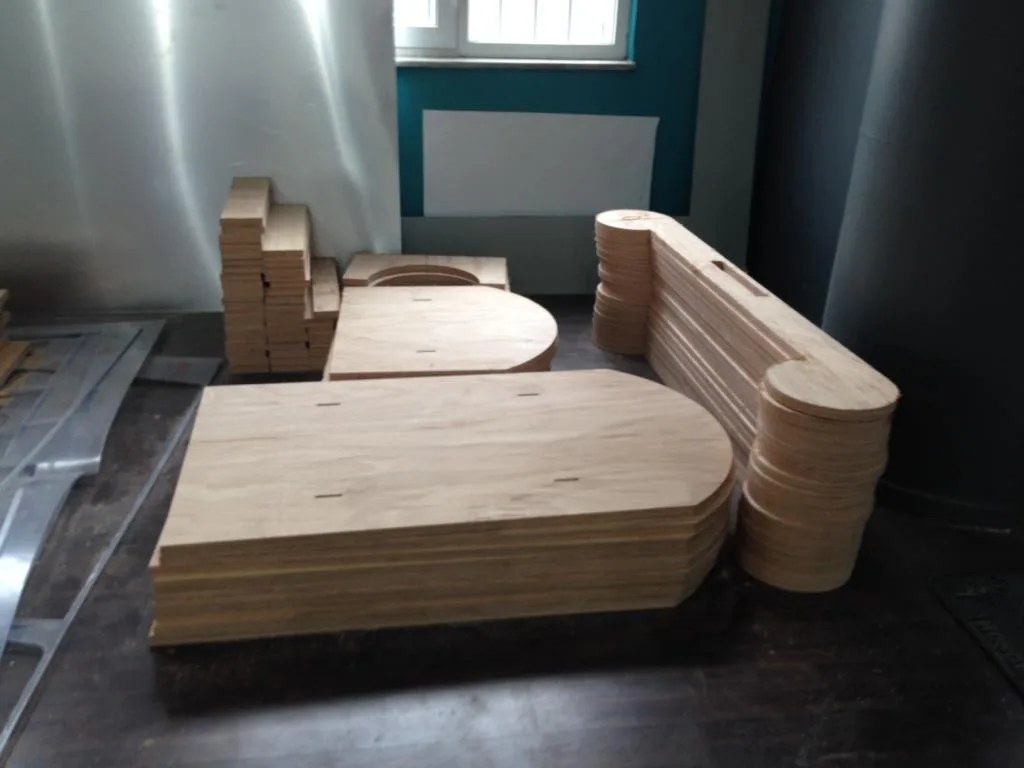
MDF and melamine MDF machining, CNC cabinet door production and curved edge banding can be planned together for the same furniture project.
How is the scope of contract production defined?
Contract CNC cutting means having parts manufactured to your design or dimensioned drawing. At Modoko CNC Kesim Cutting Centre in Istanbul Dudullu, we assess furniture, interior, signage and custom component projects. At the outset, we want to understand the part’s intended use as well as its overall dimensions. A shelf, an interlocking model component and a patterned cabinet door may need different preparation and machining even at the same size. We therefore base pricing and delivery planning on the file contents.
You can supply the material yourself or request a quotation that includes it; specify your preference in the enquiry. Describe cutting, grooving, pocketing and three-dimensional surface machining separately. Painting, coating, edge finishing, assembly and transport are not automatically included in a cutting request. Listing every operation you want quoted at the outset makes clear the condition in which the product is to be supplied. Send your file through the quotation form to begin the assessment.
What types of projects can use contract cutting?
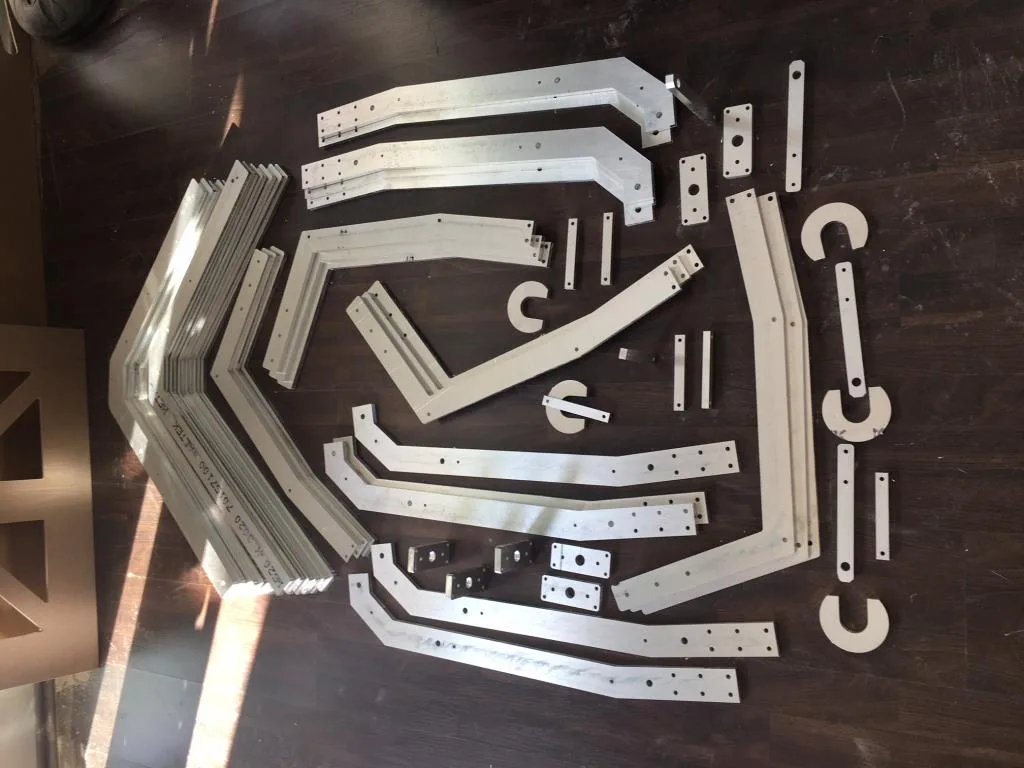
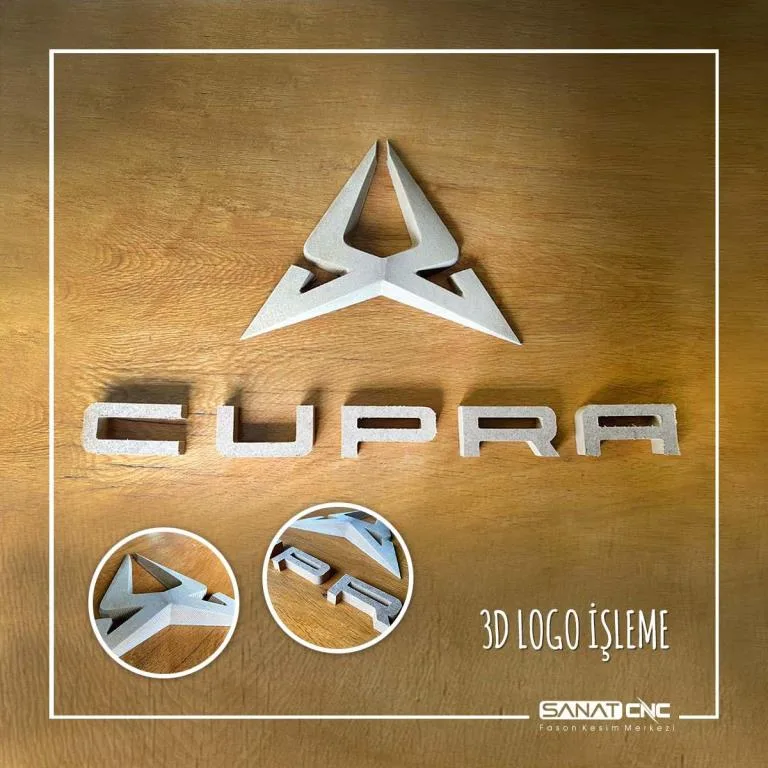
File-based production can cover furniture doors, panels, shelves and supporting components; decorative surfaces and partitions for interiors; and letters, signs and stand components for advertising. One-off requests and large production runs require different planning. In batch work, the number of designs, similarity between parts and sheet nesting become important. For a single part, drawing preparation and secure workholding may account for a larger proportion of the total time.
For interlocking parts, include an assembly view as well as the individual contours to make critical relationships clear. An assembly image does not replace production dimensions: each part must have its exact width, length and thickness specified. When reproducing an existing part, mark worn or broken areas rather than assuming they represent the original dimensions. If a sample must be measured, let’s discuss that preparation separately.
Material and machine selection
Malzeme uygunluğu, gerçek ürün bilgisi ve çizim üzerinden iş bazında değerlendirilir.On the material pages lists the details to include in your request.
The Exitech CNC router has a 200 × 400 cm working area and the Mutlucam CNC router has a 210 × 280 cm working area. Orientation and workholding on these three-axis machines are part of production planning. Our Xenon CO2 laser has a 140 × 100 cm working area and 200 W power. The method is chosen according to material, cutting details and required edge appearance, as well as part size. Explore our machinery to see the available capacity.
Let's discuss dimensions and tolerance at the outset
Critical dimensions and acceptance criteria are confirmed for each job before production.
The nominal thickness marked on a sheet may differ from the measured thickness of the actual material. For interlocking designs in particular, request an assessment using the material that will be machined. Paint or coating applied after cutting may affect assembly clearance, so agree the necessary allowances with your installation team. Any adjustments to drawing dimensions should be discussed with you before proceeding. Keep the approved drawing version and submit changes under a new file name.
Details affecting the price
Material area alone is not enough to price contract cutting. Total toolpath length, hole count, machining depths, tool changes and preparation time affect cost. A plain panel and a panel of the same size with many small cut-outs may take different amounts of time. For 3D reliefs, surface detail and required finish are also assessed. Rather than quoting a fixed square-metre rate before seeing the file, we prepare a quote for the actual scope.
Adding up part areas is only the starting point for assessing material waste. Tool clearance, edge workholding allowances, grain direction and unusable sheet areas affect nesting. Provide actual sheet dimensions if you supply the material. You can also specify offcut returns, part labels and packaging requirements. When comparing quotations, check that material, preparation, cutting and transport are covered on the same basis. Our pricing page summarises the information needed for comparison.
Preparing a file for cutting
Preferably send DXF or DWG for two-dimensional cutting and STL for three-dimensional machining. Clearly state the drawing units and include a key dimension that can be checked. Remove overlapping lines and show outer contours, holes and operations at different depths on separate layers. Designs containing text must preserve the intended character shapes in the file. If sending a PDF, explain whether it is a dimensioned drawing or only a visual reference.
Give each part a clear code and match the quantity list to those codes. Distinguish right- and left-hand parts, different thicknesses and visible faces. For three-dimensional files, target width, length, height and the rear area that must remain unmachined are important. Include only current production versions in a shared archive. Old alternatives or revisions saved under unchanged names can make it unclear which drawing to use.
Workflow from quotation to delivery
First, we assess your file, material and quantity details together. Missing dimensions or unclear operations are clarified before production. We then discuss scope, price and the target date. For jobs requiring a sample, we agree its approval criteria. Allow for possible changes after sampling when planning batch production. Do not regard the production date as confirmed before file approval; a changed drawing may require fresh preparation.
Delivery after production is planned according to part size and fragility. Workshop collection and carrier delivery may need different packaging. For orders shipped outside Istanbul, consider transport time separately from production time. Provide the address and recipient details in good time. Before visiting, use our contact page to reach us and find our location and directions. For production examples, explore the gallery or discuss an application similar to your file with us.
During drawing review, part orientation, tool access, workholding clearances, visible faces and subsequent production steps are considered together. This lets the operator references and the customer’s finished-part definition be checked clearly in the same file before production begins.
SEE THE WORK UP CLOSE
From our workshop, in motion.
Short clips of our own production and finished pieces. Select a video to watch.
Frequently asked questions
Can I supply my own material?
Provide the material type, thickness and actual sheet dimensions in advance. We proceed after assessing usability and the scope of processing.
Can I get a quotation for one part?
You can submit a request for a single part with your file. Preparation and workholding requirements are assessed from the drawing.
How is the lead time determined?
The file, quantity, material condition and work schedule are assessed together. Transit time is discussed separately from production time.