
Teslim süresini üretim verisi belirler
Mobilya projesinde adet, dosya kontrolü, malzeme temini, takım değişimi, işleme süresi ve tamamlayıcı üretimler takvimi etkiler. Revizyon payını azaltmak için onaylı dosya ve parça listesini birlikte gönderin; MODOKO teslim akışını inceleyin.
Delivery timing involves more than machine time
Delivery planning for contract cutting starts with drawing assessment and continues through part production and preparation for dispatch. Machine time is only one stage. File checks, material supply, production scheduling, sample approval and packaging may also need time. Provide the full job details rather than expecting a firm delivery date from overall dimensions alone. Agreeing dates against a confirmed scope is a sounder starting point.
When giving Modoko CNC Kesim your required date, specify whether it is for installation, dispatch or receipt of the parts. Workshop dispatch and arrival at your address are separate events. Our contract CNC cutting service explains the steps from file to delivery. A general statement about fast delivery does not replace a confirmed date for your own job.
How complete is the initial information package?
Assessment runs more smoothly when the file, units, material, thickness and quantities are known from the outset. Missing dimensions or unclear operations require further discussion. Distinguish outer cutting, holes, grooves and surface machining. If sending a photo, say whether a production drawing is ready. A job requiring drawing preparation has a different preparation stage from one using a checked production file.
Match the parts list to the drawing. For several designs, state each code and quantity. Remove obsolete versions of the same part from other files. Our DXF preparation guide explains file checks. For a three-dimensional surface, also read the relief file guide. Submitting only an outer contour does not complete preparation if the required model is missing.
What does it mean for material to be ready?
Having material at the workshop is only useful if it is the correct product and size. If supplying your own sheets, provide the product name, thickness, width, length and quantity. Identify surface damage, unusable areas and any required facing direction. Link the material delivery to the job's files and quotation details. Make clear which drawing revision the delivered sheets are for and whether production has been approved.
If you want us to source material, clarify colour, product code and surface requirements. For designs tied to a specific product, assess how changing material affects dimensions and appearance. Our MDF types guide explains material specifications. Do not regard the entire production schedule as fixed before the supply date is confirmed. Assess alternatives only after discussing suitability and delivery scope.
Operation type and level of detail
A simple outer contour, numerous internal cut-outs, grooves and three-dimensional machining require different preparation and operations. Two parts with the same area may have different production times. State the number of different designs as well as the quantity. Add any text or pattern engraving to the cutting request. Clearly defining the operations included in the quote also allows the schedule to be discussed against the correct scope.
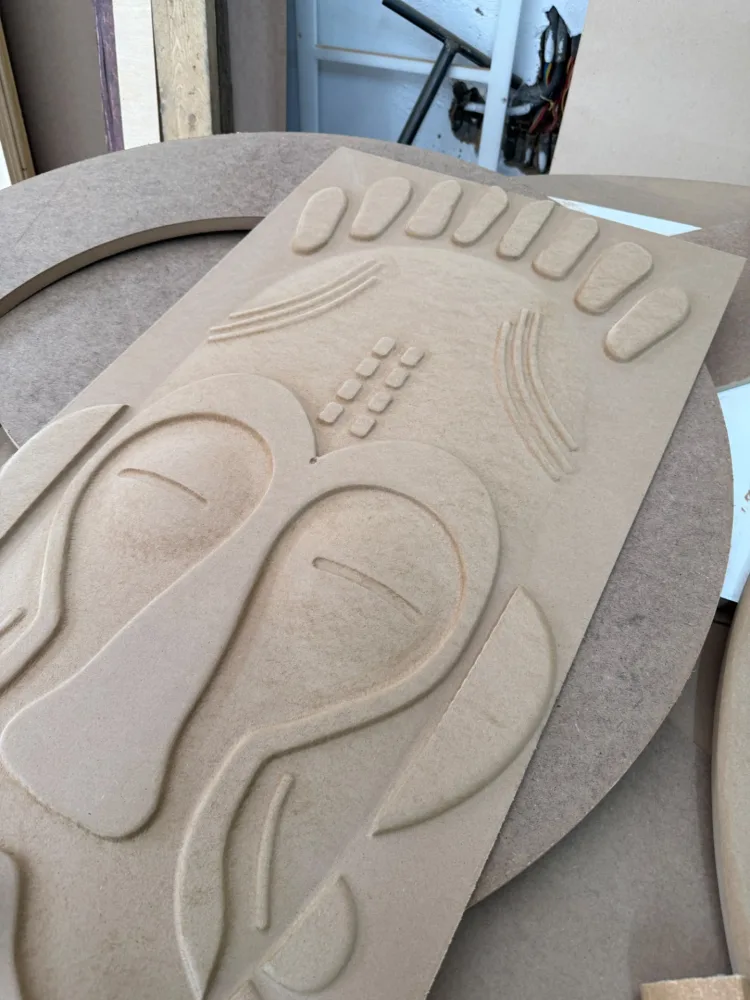
Laser cutting, CNC router cutting and 3D relief machining address different requirements. Do not choose a method solely for the shortest lead time; it must also suit the material and target result. Plan the sequence if several processes are applied to one product. Include work by other teams after cutting in the overall project schedule.
Sample and first-part approval
When requesting a sample, define what it should verify. Dimensions, fit, surface appearance and design proportions are separate checks. Allow time in the schedule for the approving person to assess it. The interval between sample preparation and approval can affect production planning. If checks require a mating part or assembly setup, have the necessary items ready. Photographs alone may not verify every dimensional requirement.
Consolidate changes after approval into one revision. Changes scattered across messages are difficult to track. Confirm the final file name and approved quantity in writing. Our tolerance and material waste guide explains how to define critical dimensions. Discuss at the quotation stage whether sampling will precede batch production or be treated as a separate order.
How do revisions affect the delivery plan?
Changes in dimensions, material, quantity or operations may require the schedule to be reassessed. A seemingly small change is not necessarily insignificant for preparation. Even moving a hole requires updates to the file and inspection list. If production has been approved, discuss the job's current stage before submitting a new file. Clearly state that the old version is superseded and the new version is current.
List the revision date, affected part codes and changed dimensions. Specify the file name rather than simply asking us to use the latest file sent. Our CNC pricing guide explains how scope changes affect pricing. Once the new scope and delivery date are confirmed, give every team the same information so cutting, finishing and installation follow a shared schedule.
Treat post-cutting processes as separate stages
If edge banding, surface preparation, painting, bonding or installation is planned, specify who will carry out each process. Raw cut parts and finished products may require different lead times. Our curved edge banding service is an example of a post-cutting operation. If band material and edges are unclear, that stage's scope is not yet complete. File and material details must be sufficient for every operation.
For work handled by another team, find out the condition in which they need the parts delivered. They may require labels visible before unpacking, protected surfaces or parts grouped in assembly order. Include these requirements in the quote notes rather than adding them at the last moment. Define delivery in terms of parts being ready for the next team to use, not simply leaving the machine. This makes dependencies in the schedule clearer.
Packaging, dispatch and collection
Part size, delicate surfaces and quantities affect packaging. Small sign letters, large panels and relief carvings may require different transport arrangements. If collecting from the workshop, plan your vehicle and handling arrangements in advance. For shipping, ensure the address, recipient details and packaging requirements are correct. Distinguish the workshop dispatch date from the carrier's delivery time, and update your receiving arrangements when dispatch information arrives.
If there are several delivery addresses or batches, list which part codes go to each. For partial delivery, specify priority parts and quantities, and agree the schedule for the remainder separately. Compare package contents with the parts list on delivery and pass the current drawings to the installation team. Checking against the wrong revision can make a correctly manufactured part appear incorrect.
A short checklist for requesting a completion date
Include the current drawing, material details, thickness, quantities and additional operations in your quotation request. State any sample requirement, who will approve it and your preferred delivery method. Specify whether the required date refers to installation or workshop collection. Our production galleries provide references for similar processes; your own scope is assessed separately.
Send your files to Modoko CNC Kesim through the quotation form to discuss production and delivery planning. A firm date is confirmed after assessing the scope and production schedule. Keeping files, materials and approvals organised helps at the outset and during final delivery checks. Written, up-to-date requirements help all teams follow the same plan.
Frequently asked questions
Are dispatch and delivery dates the same?
Dispatch from the workshop and delivery to your address by the carrier are separate stages. State your installation date, shipping method and delivery requirements separately.