
Mobilya parçası teklifinde fiyat girdileri
Panel type, thickness, quantity, total toolpath, holes, grooves and finishing work such as labelling or curved edge banding are reviewed together. Use the pricing information page to request a firm quotation from a production-ready file instead of relying on a quick estimate.
The starting point for a quotation: what will be produced?
CNC cutting prices are not determined by sheet dimensions alone. Two panels of the same size may differ greatly: one may need only an outer contour, while the other contains hundreds of cut-outs, grooves and surface details. Preparation, machine time and inspection requirements will differ. A useful comparison starts with a clear description of the part. If material, thickness, actual dimensions, quantity and delivery scope differ, the price difference between two quotes is not enough to compare them.
Share your drawing and parts list together when requesting a quotation. If the file is not ready, you can send a dimensioned sketch and reference image and indicate that drawing preparation is needed. Creating a drawing, checking an existing file and proceeding directly to production are different scopes of work. Agreeing which preparation is included in the price at the outset reduces later scope changes. Our contract CNC cutting service explains how the process progresses from file to delivery.
Why do material and thickness matter?
The exact material name, surface finish and thickness affect the assessment. Raw MDF and faced sheets, solid wood and plywood, or acrylic and Forex should not be described interchangeably. Whether you supply the material or ask the workshop to source it also changes the quotation scope. If sending your own sheets, provide their dimensions, quantity, surface condition and any areas that must not be used. This helps avoid accidentally comparing a cutting-only price with a quotation that includes material.
Increasing thickness does not raise the price by the same proportion for every job. Part geometry, the method used and required edge result are assessed together. Cutting a part completely from a sheet and routing a groove to a limited depth are different operations. Identify which lines represent cutting, grooves or pockets in your drawing. Our MDF CNC cutting page explains how to communicate material and surface details.
Cutting length and level of detail
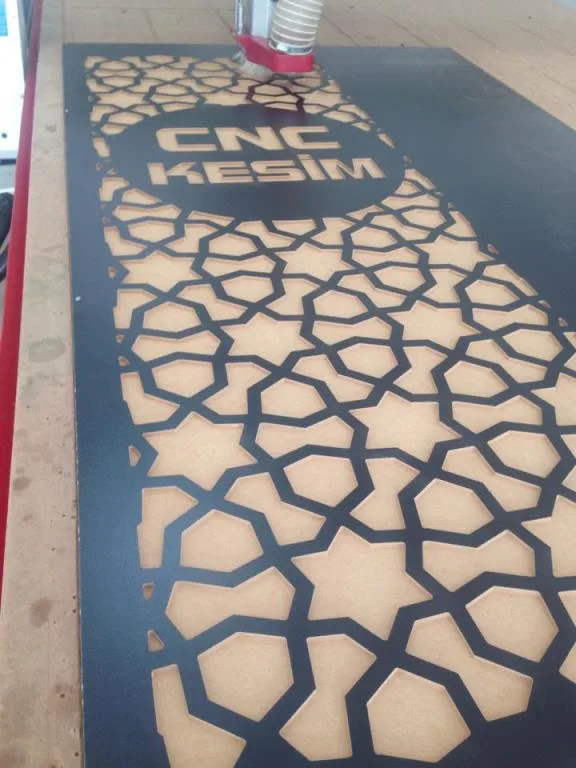
A small-looking part can contain many internal cut-outs. Narrow passages, small islands and repeated decorations affect the machining plan, and overall width and length alone do not show them. Include a production drawing with your price request wherever possible. A decorative panel and a plain shelf covering the same area do not necessarily require the same labour or time.
List grooving, hole preparation, surface engraving and three-dimensional machining requests separately. For relief production, the model's depth variations and required level of detail are assessed. Applying a cutting price directly to relief machining does not provide a reliable comparison. Our 3D cabinet door and relief service explains how design and surface requirements affect the quotation process. If a part requires several operations, clearly define its final delivery condition.
Total quantity and the number of different parts are separate details
Producing one hundred identical parts requires different organisation from preparing one hundred different parts. The former can repeat the same drawing and inspection dimensions; the latter requires each part's file, layout and identity to be tracked separately. State the number of distinct designs as well as the total quantity in your quotation request. For products made up of several components, provide both the number of sets and the quantity of each component within a set.
Ask how a higher quantity would affect the price of your particular job. Applying one general discount rate to every material and design can be misleading. Tell us in advance if you need a sample, first-part approval or batches delivered on different dates. A job produced and delivered in one batch may require a different plan from several smaller batches. The quote should clearly state the quantity and delivery arrangement it covers.
Sheet layout, material waste and usable area
Nesting parts on a sheet affects material usage. Allowances between parts, sheet margins, grain direction and workholding requirements must be considered. Dividing sheet area by part area gives an initial estimate, but does not establish a confirmed production quantity. Long, narrow or curved parts in particular may leave unused areas. Include the return of reusable offcuts in the quotation scope if required.
Rotating parts is not always suitable for faced materials or materials with a directional pattern. Explain the layout required if the grain must continue across adjacent doors. Defects or existing holes restrict the usable area of a sheet. Marking these areas when delivering the material makes checking easier. Our tolerance and material waste guide helps distinguish drawing dimensions from production nesting.
File preparation and revisions
Missing dimensions, overlapping lines or unclear operation layers may require the quote to be reassessed. State the file units, add a key checking dimension and separate old versions from the production package. If the quoted drawing later changes, confirm the scope before treating the revision as covered by the same quote. Even a few added holes or grooves can change machining and inspection requirements.
It helps to include the file name and revision number in your quotation. Ensure that the approved dimensions match the file sent to production. Our DXF preparation guide explains file preparation steps. If files in different formats belong to the same project, state which takes precedence. A visual preview helps communication but does not always replace production data.
Additional operations and delivery scope
List your requirements for sanding, surface preparation, edge banding, painting, assembly and packaging separately. Prices cannot be compared directly if one quotation covers only cut parts and another covers a finished product. If you need a curved panel banded, specify the band type, colour and the edges to be treated. Our curved edge banding service explains the information needed to prepare this additional operation.
Freight, parcel delivery and workshop collection options are discussed according to the job's size and fragility. Large sheet components and small decorative items have different packaging requirements. Tell us if surfaces must be kept apart, parts labelled or items separated for different addresses. When specifying a delivery date, include the time needed for installation and subsequent processes as well as the final use date.
Keep the order record clear
When approving a quotation, record the parts list date, current drawing name and delivery method together. Identify parts added later to the same project in a separate supplementary list, so it remains clear which product group the previous price covered. Show the relevant thickness and colour on each row where these vary. Include agreed packaging and material sourcing decisions in the final approval. Treat the quotation as a description of the work to be produced, not merely a record of the total price. Checking quantities against the same list at delivery makes it easier to compare the completed work with the original agreed scope. Clarify any outstanding points before production begins.
A quick approach to comparing quotations
When comparing two quotations, first check material and thickness, then drawing revision, quantities and additional operations. Read how tax, packaging and transport are included or excluded. Ask for written clarification of unclear items rather than making assumptions. Knowing the conditions under which the price applies and how drawing changes affect it is more useful than focusing only on a low initial figure.
Share your file, material details, quantities and delivery requirements with Modoko CNC Kesim through the quotation form. Our production galleries can illustrate similar processes, but a photograph of another job does not determine the exact price of yours. A quotation based on your project details clarifies both what will be produced and the stage at which it will be delivered.
Frequently asked questions
Can I get a firm price from width and length alone?
A detailed assessment also requires the drawing, material, thickness, quantity and delivery scope. Parts with the same overall dimensions can involve different amounts of work.