
Explore this service in pictures
Technical specifications
| Materials | MDF, MDFlam, Sunta, Suntalam, Kontrplak, Masif ağaç, Masifpan |
|---|---|
| Working area | Assessing suitability for the KN700-3 based on part shape and dimensions. |
| Thickness | Confirmed according to panel and edge band thickness. |
| Tolerance | Critical dimensions and acceptance criteria are confirmed for each job before production. |
Finishing production for curved furniture components
We apply project-specified edge banding to round or free-form MDF parts prepared by CNC. Radius, thickness, edge band type and quantity are checked before production.
See the technical equipment on the KN700-3 machine page and the CNC preparation process on the MDF CNC cutting page.
Edge banding for curved furniture components
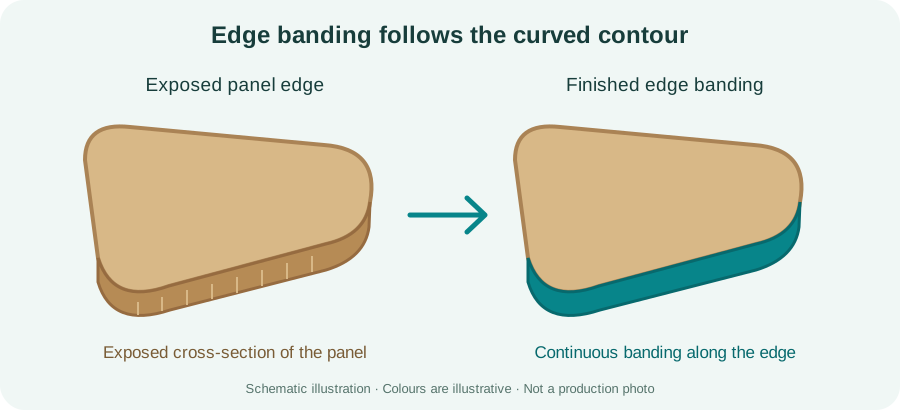
Curved edge banding applies suitable banding to exposed furniture edges that do not follow a straight line. Rounded corners, curved outer contours and custom-shaped panels may need edge finishing after cutting. At Modoko CNC Kesim Cutting Centre, we assess these requests for our KN700-3 fully automatic curved edge banding machine. Share the part drawing, sheet details and required finished appearance so cutting and banding can be planned together. Suitability cannot be confirmed from an exterior photo alone; dimensions and material details are also needed.
A furniture panel may have a finished surface while its cut edge remains exposed. Edge banding is used to finish the appearance of that edge. Consider how the banding relates to the surface colour, finished dimensions and intended use. Show whether all edges or only selected sections need banding. An edge that joins another part or remains hidden may need different treatment. This distinction allows the quote to cover the work actually required.
Assessing your job for the KN700-3
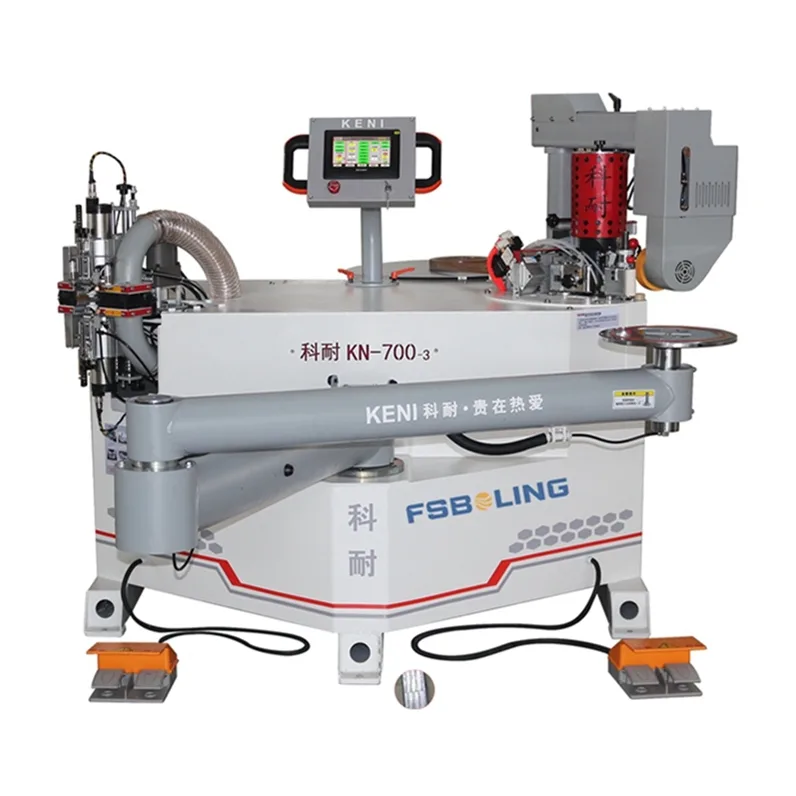
The KN700-3 added to our workshop is a fully automatic curved edge banding machine. The photograph on this page shows the machine; it is not presented as a photograph of a customer's banded product. See the curved edge banding machine page for details. The part's dimensions, curves, panel thickness and selected edge band are assessed together before acceptance for processing. Do not plan an order around a minimum radius, speed or thickness value that has not been technically verified.
Using a fully automatic machine does not mean every geometry or edge band type is suitable under the same conditions. Outward curves, inward curves and tight transitions are assessed differently. The drawing should show the entire curve. A close-up of only one section may not be enough to understand the full geometry. A top view, overall dimensions and, if needed, an edge close-up make the assessment clearer. Share product details with us if you plan to obtain material before suitability has been confirmed.
Cut dimensions and finished dimensions
For a part that will receive edge banding, the dimensions after cutting may differ from the required dimensions at delivery. Always specify the stage to which the width and length in your drawing refer. The finished outer dimensions matter when a panel must fit inside another part. Band thickness and the edges to be banded must be taken into account. If you are unsure how to calculate allowances, discuss this before approving the drawing as a final production instruction. Adding or subtracting allowances yourself may result in a poor fit with the mating part.
If you require cutting and edge banding as part of the same job, specify both operations together. Our CNC router cutting service explains creating outer shapes, while our MDF CNC cutting page covers sheet cutting and surface machining. If bringing pre-cut parts, provide their current overall dimensions, sheet type and edge condition. The edge's suitability for banding is assessed separately. Do not assume that an existing cut can be deemed physically suitable from the drawing file alone.
Compatibility between edge banding and the panel surface
Provide the product details, colour, width and thickness of the edge band you want to use. Also explain whether you will supply it or require a quotation that includes sourcing it. A colour name that appears to match the panel does not necessarily mean an exact match across different products. Where appearance is critical, the panel and band should be assessed together. Lighting in the photograph, screen settings and surface texture can affect perceived colour, so an exact match should not be expected from a phone image alone.
If painting, coating or another treatment will follow, agree the production sequence with the relevant team. An edge banding request does not automatically include painting the entire part or assembling the furniture. Consider the conditions at the installation site when choosing materials; edge banding alone is not a guarantee of resistance to water or outdoor weather. Suitability for a particular use is assessed separately using the panel and edge band specifications. State your requirements in writing in the quotation request.
Prepare the drawing and parts list
Identify the edges to be banded with a separate layer or notes in your file. If only part of an edge needs treatment, make the start and end points clear. Define curved contours at actual size and state the scale and units separately. You can include an overall PDF view with the DXF or DWG drawing. A photo helps explain a shape but does not replace an exact dimensions list. Give each different part a code, quantity and material specification to make production easier to track.
Identify left- and right-hand parts, mirrored designs and identical shapes with different face colours separately. If all parts of a set will be installed together, include the overall layout. When revising a drawing, state which parts are affected and mark the previous version as superseded. The distinction between revisions, dimensions and visual references explained in our relief file preparation guide also helps when describing custom-shaped parts. Before sending, check that the final production file matches the quantity list.
Parts to be delivered as sets
When sending several furniture panels, code them in assembly order. Two panels with the same outline may need different edges banded and should therefore have separate codes. Mark any banding start or joint position that matters to appearance. A note identifying the front face and a small layout showing its installed orientation are helpful. Tell us if labels must remain visible during packaging or if parts from the same set must be grouped together. Before sending delivered parts for assembly, compare them with the quantity list and approved drawing. Any file passed to another team for further work must use the same revision, keeping cutting, banding and assembly information consistent.
Pricing, samples and delivery scope
Edge length alone is not enough to price a banding job. Part geometry, number of different designs, quantity, panel and band properties, existing edge condition and preparation requirements are all assessed. Cutting is added as a separate scope if required. Mention samples, material sourcing and special packaging needs in advance. Our contract CNC cutting service explains the general ordering process, while our pricing page covers points to consider when comparing quotation scopes. Requesting a quotation based on your own part details provides a more reliable comparison than relying on a fixed figure.
Delivery and dispatch terms are confirmed for each job.In our production gallery shows our general work, through the quotation form to submit your curved part so we can plan the required operations together, from cutting to edge banding.
Frequently asked questions
Which machine do you use for edge banding?
We have a KN700-3 fully automatic machine for curved edge banding. Suitability is assessed using part and banding details.
Can every curve and banding type be processed?
No. Internal and external curves, part dimensions, sheet thickness and banding details must be checked together.
Can I bring parts that have already been cut?
Share a drawing or photograph of the part, its dimensions and edge condition in advance so we can discuss the scope of work.
Can cutting and edge banding be quoted together?
You can specify both operations in the same request. Cut dimensions, edge band thickness and required finished dimensions are clarified together.